
The US–Iran Ceasefire and the 10-Point Proposal Explained
As the Iran-US war hits a ceasefire, we analyze the impact of crude oil on Nifty 50 earnings, RBI growth forecasts and the "TACO" principle’s market rally.

The world appeared to be staring down the barrel of a nuclear-tinged West Asian conflict. Political rhetoric escalated rapidly, with threats that sounded catastrophic for global stability.
Yet markets reacted in a surprisingly calm manner.
The MSCI All Country World Index (ACWI) actually rose 1.96% in the first week of April 2026, suggesting that investors were not buying into the doomsday narrative.
Why? Because markets believed the confrontation would ultimately end in negotiation rather than escalation.
Many investors began referring to what traders jokingly call the “TACO principle” — Trump Always Chickens Out. In other words, the market bet that aggressive rhetoric would eventually give way to diplomacy.
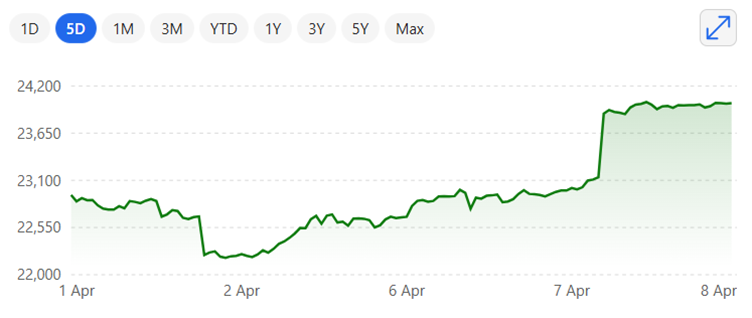
This skepticism was mirrored domestically; even during the peak of the hostilities, the Nifty 50 gained 3.5% in the first week of April.
Behind the scenes of the political drama, investors recognized a familiar pattern: pressure first, negotiation later.
That view proved correct. A two-week ceasefire is in play and oil, which had spiked on fears of Hormuz disruption, is retreating.
Ceasefire & the 10-Point Proposal
The two-week ceasefire has effectively confirmed what markets anticipated all along — both sides were searching for a way to step back from escalation.
But the terms of the proposed settlement reveal something far more significant. Iran's 10-point proposal that Trump has labeled a "workable basis" is anything but a middle-ground agreement; it is essentially a blueprint for a total regional reset.
Far from a compromise, these demands represent a sweeping list of requirements designed to shift the balance of power in West Asia permanently.
Iran's 10-Point Proposal Includes:
- Total Sovereignty: Iran’s absolute control over the Strait of Hormuz.
- Nuclear Legitimacy: Full acceptance of uranium enrichment.
- Sanction Erasure: Lifting of all primary and secondary sanctions, plus UN and Board of Governors resolutions.
- The Price of Peace: Financial compensation to Iran and the full withdrawal of US combat forces from the region.
If Trump treats this as a basis for a deal, he is either negotiating from a point of unprecedented vulnerability or, more likely, utilizing these extreme terms as a face-saving "off-ramp."
What happens to the Strait of Hormuz?
Even with the ceasefire in place, the global shipping ecosystem may not return to its previous structure. Iran now effectively holds the position of gatekeeper of the Strait of Hormuz, a passage through which nearly one-fifth of the world’s oil supply travels.
There is growing speculation that Iran and Oman could introduce transit charges on commercial vessels, effectively transforming Hormuz from an open international corridor into a controlled and monetized shipping route.
If such a structure emerges, it would fundamentally change the economics of global energy transportation. And for energy-importing economies like India, the implications are immediate.
Impact on India: When Oil Hits the Growth Story
India entered the final stretch of the fiscal year with strong macro momentum—GST 2.0 was rolling, credit expansion was healthy and trade deals with the UK, EU and US were in the pipeline. The macro backdrop appeared close to a “Goldilocks” phase — steady growth with manageable inflation.
That momentum was abruptly disrupted on February 28 as West Asia tensions escalated. Within days, the disruption of shipping routes through the Strait of Hormuz pushed global energy markets into turmoil.
Brent crude surged nearly 60%, briefly crossing $120 per barrel, injecting a sudden external shock into India’s otherwise stable macro environment.
The consequences quickly spread across the economy.
The Fallout for the Indian Economy
Rupee under Pressure
The sudden spike in global risk aversion triggered aggressive foreign institutional investor outflows. As capital moved toward safe-haven assets, the rupee weakened sharply, breaching the ₹95 per dollar level.
Growth Forecasts Revised Lower
The Reserve Bank of India has begun adjusting its growth outlook in response to the deteriorating macro environment. Governor Sanjay Malhotra lowered the FY27 GDP growth projection to 6.9% from the earlier estimate of 7%, citing persistent global headwinds and elevated commodity prices.
Stagflation Concerns Emerging
The conflict is impacting India through multiple transmission channels. Even as crude prices have moderated from their peak, they remain elevated above $90 per barrel. Higher energy costs are beginning to filter through the economy via rising logistics, manufacturing and input costs.
External Balance Pressures
The surge in commodity prices has widened the current account deficit. At the same time, supply chain disruptions in key inputs such as fertilizers risk affecting agricultural productivity, adding another layer of inflationary pressure.
From Macro Shock to Corporate Earnings
These macro pressures are now beginning to show up in corporate earnings expectations. Brokerages have already started revising projections downward.
BofA Securities has cut its FY27 Nifty earnings growth forecast to 8.5%, down from 14% before the conflict.
Motilal Oswal expects Nifty 50 earnings growth to fall to just 6% YoY, the weakest pace in five quarters.
The logic? Even with a truce, the risk of "stagflation" remains a persistent drag.
However, the market is forward-looking. If this morning's ceasefire morphs into a permanent exit from the war, expect these forecasts to be revised upward just as quickly as they were cut.
The Sectoral Scorecard
While the ceasefire has sparked a relief rally in equities, the earnings impact will vary significantly across sectors.
- Resilience Leaders: Financials are expected to anchor the market this quarter. Metals could also benefit from elevated global commodity prices.
- Energy Squeeze: Oil Marketing Companies (OMCs) are facing margin pressure as retail fuel prices remain capped while procurement costs rise.
- Margin Compression: Consumer Durables and Paints are feeling the pinch from crude-linked raw material costs.
- Export Volatility: Industries such as chemicals, textiles, engineering goods and auto components face a combination of higher input costs, freight disruptions and weaker Western demand.
What Should Investors Do?
As geopolitical tensions gradually ease, market focus will likely shift back toward corporate earnings and macro fundamentals. The most important signals will emerge during upcoming earnings calls, particularly management commentary on input costs and demand outlook.
If "de-escalation" is cited as a key positive for Q1 FY27 input costs, the margin of safety for patient investors has never been more attractive.
Valuation Check: Nifty 50
As we highlighted in our previous market outlook, the Nifty 50 is trading at a forward P/E of ~17.7x. While this has edged up with the relief rally, it still represents a significant ~14% discount to its recent long-period averages.
Conclusion
We’ve said it repeatedly—near-term volatility is the price of admission. Instead of reacting to daily swings, use this phase for structured, staggered accumulation.
Building positions while the "clouds are clearing" ensures you are best positioned once the sun finally breaks through.
That said, while the ceasefire has injected much-needed optimism into global sentiment, the foundations remain shaky. Given that the root geopolitical issues remain unresolved, this lull likely represents a temporary breather rather than a long-term exit from the crisis.
But as the immediate noise around the conflict subsides, earnings trajectory and macroeconomic trends are likely to remain the primary drivers of market direction.
Disclaimer: This news is solely for educational purposes. The securities / investments quoted here are not recommendatory. Investors are advised to consult with their financial advisors before making any investment decisions.
For detailed Disclaimer, please visit our website https://liquide.life/