
Tax Relief or No? Budget 2026 Expectations Revealed
With the Union Budget 2026 approaching, the consensus among analysts is clear: stability is the priority. We look at the top expectations regarding income tax, TDS and global capital.

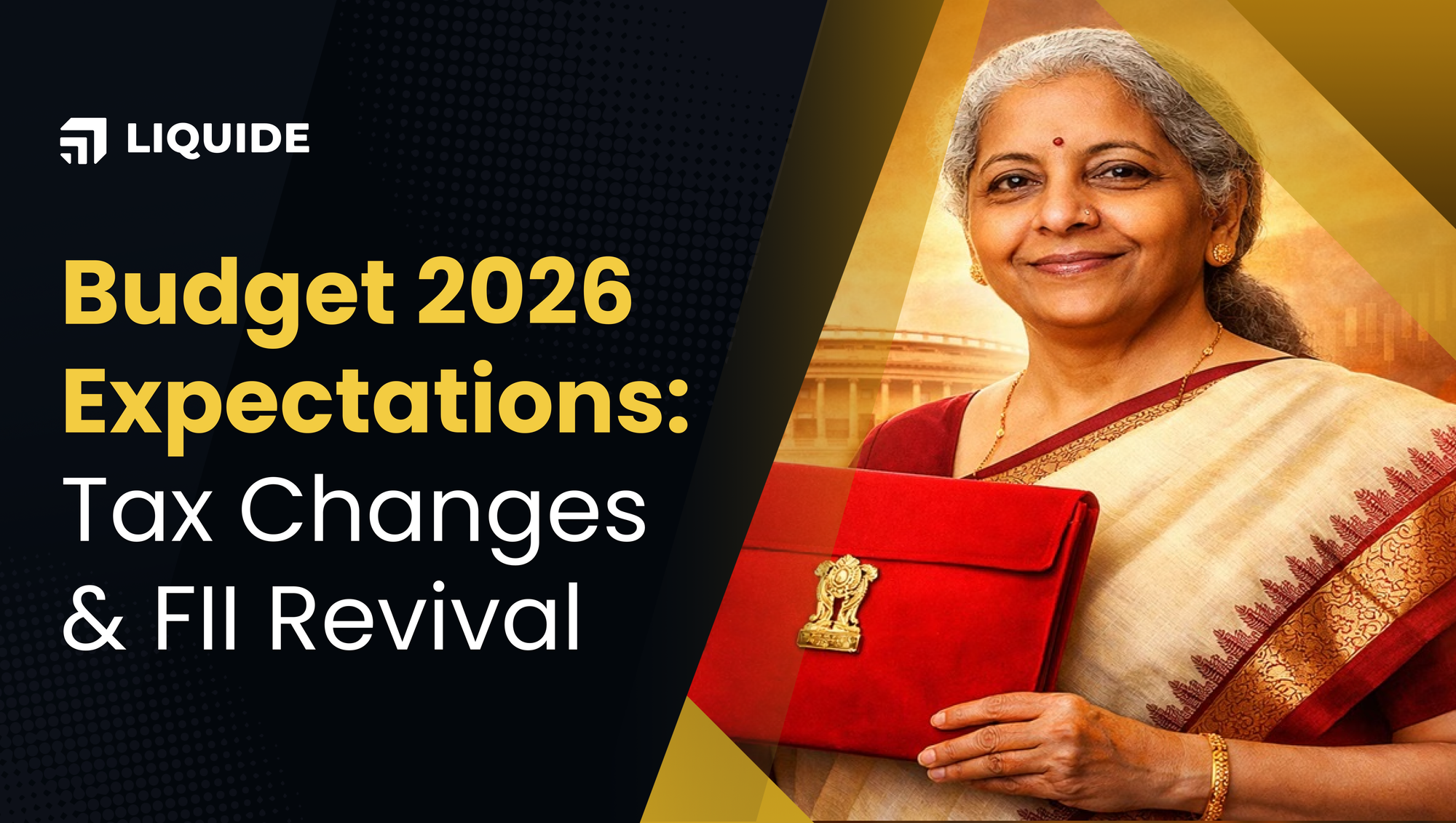
As February 1st approaches, Dalal Street is buzzing with the usual pre-Budget anticipation. While the Union Budget is always a milestone for the Indian economy, Budget 2026 arrives at a unique juncture.
After the sweeping reforms of the New Income Tax Act in 2025, Finance Minister Nirmala Sitharaman faces a delicate balancing act: maintaining fiscal discipline while reviving the animal spirits of both domestic and global investors.
1. The "Limited Headroom" Reality
Following the significant relief provided in the 2025 Budget—which streamlined personal taxes for earnings up to ₹12 lakh, market participants and tax experts are broadly aligned on one point: there is limited fiscal headroom for sweeping new tax cuts.
- Fiscal Path over Flashy Sops: The government is currently on track with its fiscal deficit targets. To stay on this path of "fiscal correctness," the consensus is that the FM will avoid any aggressive revenue sacrifices that could derail deficit management.
- Capex Momentum: Over the last five years, government capital expenditure has exceeded expectations by a wide margin. The priority now is to maintain this momentum rather than diverting funds toward populistic tax breaks.
2. What the Industry Still Expects (The Fine-Tuning)
While "big-bang" changes are off the table, the industry expects the government to use its limited room for surgical strikes on specific pain points:
- Standard Deduction: There is a strong collective push to increase the standard deduction from ₹75,000 to ₹1,00,000 to help the salaried class fight inflation.
- TDS Rationalization: The consensus among businesses is that the current TDS framework is too complex. Rationalizing these laws is seen as a "zero-cost" way to improve the ease of doing business.
- "No Surprise" Factor: FM Sitharaman is likely to maintain the status quo on income tax slabs, focusing instead on the implementation of the New Income Tax Act, 2025, effective April 1.
3. The Investor Mandate: Reversing the FII Flight
The most critical expectation from the investment community isn't about personal tax, but about Global Capital. For two years, Foreign Institutional Investors (FIIs) have been net sellers.
The Consensus Strategy for Recovery:
- Capital Gains Tax Rationalization
This is the "big ticket" demand. In the 2024 budget, Long-Term Capital Gains (LTCG) tax was hiked to 12.5%.
The Expectation: A rollback of LTCG back to 10% or an increase in the exemption limit (currently Rs 1.25 lakh) to Rs 2 lakh.
The Impact: FIIs are sensitive to post-tax returns. Lowering this tax would make Indian equities more competitive against other emerging markets.
- Abolition or Reduction of STT
The Securities Transaction Tax (STT) is often criticized by foreign investors as a "triple tax" (alongside LTCG and Dividend Distribution Tax).
The Expectation: A significant cut in STT, especially for high-frequency and delivery-based trades.
The Impact: Reducing the cost of churn and entry/exit would improve liquidity, which is a primary concern for large institutional desks.
Summary: A "Quiet" but Positive Outlook
The consensus for Budget 2026 is actually quite optimistic: when expectations are low, the potential for a positive surprise is high. If the government delivers a "quiet" budget that focuses on policy certainty and investor visibility, it could be a massive win for business confidence—even without headline-grabbing tax cuts.
Investor Note: In a year of "limited headroom," look for growth in the sectors the government continues to shield. Check out our sector-specific analysis here: Budget 2026 Predictions: Top Sectors & Stocks to Watch
Stay tuned as we continue to analyse and track every development in the lead-up to the Union Budget 2026.
Don’t miss out on timely updates and expert insights – Subscribe now and be prepared for the market moves ahead of the Union Budget!