
Why DMart Stock Fell 5% Today: Quick Commerce, Slower Growth, and What Investors Need to Know

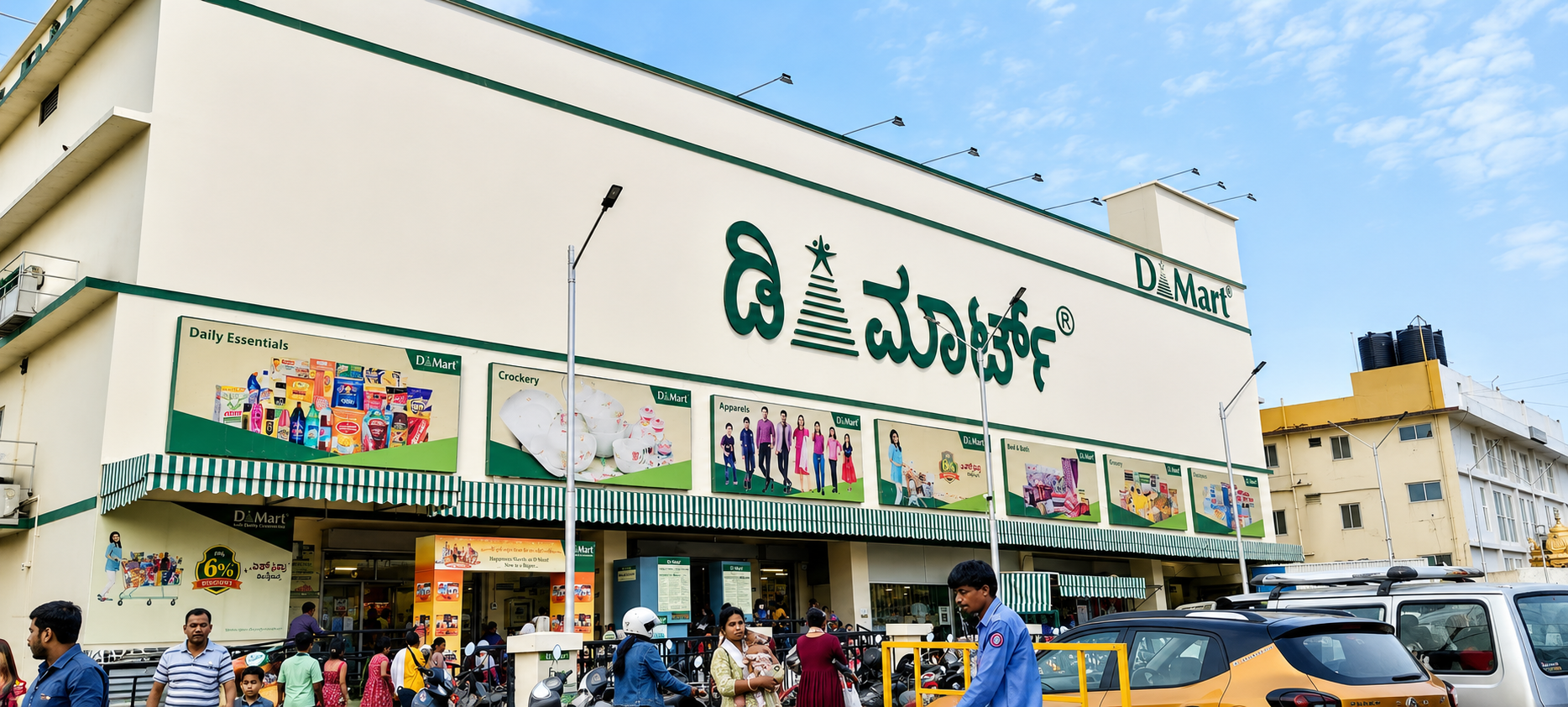
DMart shares dropped nearly 6% after the company's analyst meeting reinforced concerns around quick commerce competition, slower same-store sales growth, and an unchanged business outlook. While expansion plans remain intact, investors are questioning the pace of future earnings growth.
Why Is DMart Stock Falling Today?
Shares of Avenue Supermarts Ltd. (DMart) fell close to 6% in Tuesday's trade after the company's post-results analyst meeting left investors unconvinced about near-term growth prospects.
There was no major negative announcement. Instead, the market reacted to management's comments on existing trends—particularly the continued pressure from quick commerce, sluggish growth at existing stores, and the absence of any meaningful upgrade to future guidance.
For a company that has historically traded at a premium valuation, even modest signs of slowing momentum tend to attract a strong market reaction.
DMart Share Price Today
| Metric | Value |
|---|---|
| Intraday Decline | 5.87% |
| Share Price | ₹3,791.30 |
| Store Addition Target | 80–100 stores |
| Expansion Strategy | Higher proportion of leased stores |
Why Did DMart Stock Fall?
Several factors combined to weigh on investor sentiment.
1. Quick Commerce Continues to Gain Ground
The biggest concern remains the rapid expansion of India's quick commerce industry.
Platforms promising grocery delivery within 10 to 30 minutes are steadily changing shopping habits, particularly in large cities. Consumers increasingly prefer ordering essentials online rather than visiting supermarkets for smaller purchases.
This shift has created a fresh challenge for traditional retailers like DMart, whose business has long benefited from high customer footfall and bulk purchases.
Although quick commerce currently has a stronger presence in metropolitan markets, investors are watching closely to see whether its influence spreads further across the country.
2. Same-Store Sales Growth Remains Soft
Another issue highlighted during the analyst interaction was the slower pace of growth at existing stores.
While DMart continues to expand through new outlets, sales from mature stores have not accelerated at the pace investors were hoping for.
Same-store sales growth is an important measure because it reflects demand at locations that have already been operating for several years. When this metric weakens, it often raises questions about underlying consumer demand rather than expansion-driven revenue growth.
3. Management Did Not Raise Expectations
Management reiterated its existing expansion roadmap but stopped short of announcing any significant changes that could improve investor confidence.
The company continues to target 80 to 100 new store openings, maintaining the same outlook communicated earlier.
Analysts also noted that a larger share of upcoming stores is expected to be leased instead of owned. While this approach lowers upfront capital requirements and allows faster expansion, investors will be monitoring its impact on margins and long-term returns.
Revenue Growth Remains Healthy
Despite Tuesday's decline, DMart's latest quarterly numbers were not weak.
For Q1 FY27, the company reported revenue from operations of approximately ₹18,343.5 crore, supported by continued store additions and steady consumer demand.
However, investors appear to believe that revenue growth alone may not be enough if profitability and existing-store performance continue to moderate.
Key Factors Driving Investor Concern
| Factor | Why It Matters |
|---|---|
| Quick commerce expansion | Reduces supermarket footfall in urban markets |
| Slower same-store sales | Indicates softer growth at mature stores |
| Premium valuation | Leaves less room for operational disappointments |
| Metro market competition | Could pressure margins over time |
| No change in guidance | Failed to improve market expectations |
Store Expansion Plans Remain on Track
DMart has not altered its long-term expansion strategy.
The company continues to target 80 to 100 new stores, reflecting confidence in India's organized retail opportunity.
Management also expects leased properties to account for a larger share of future additions, enabling faster network expansion while requiring lower capital investment.
Whether this model can maintain DMart's historically strong profitability will remain an important area of focus for investors.
What Investors Should Watch Next
Over the coming quarters, investors are likely to monitor:
- Same-store sales growth across mature stores
- The impact of quick commerce on customer traffic
- Margin trends as competition intensifies
- Execution of the planned store expansion
- Earnings growth relative to market expectations
Quarterly updates will provide greater clarity on whether the company can maintain its leadership position as India's retail landscape continues to evolve.
Key Takeaways
DMart shares came under pressure after management's analyst meeting reinforced existing concerns rather than introducing fresh positives.
The company's expansion plans remain intact, with a target of 80 to 100 new stores, but investors are increasingly focused on slowing same-store sales growth and the growing influence of quick commerce.
Although revenue continues to grow, the market is looking for stronger evidence that DMart can sustain earnings momentum while adapting to changing consumer preferences and intensifying competition.
Frequently Asked Questions (FAQs)
Why did DMart shares fall today?
DMart shares declined after management's analyst meeting highlighted continued pressure from quick commerce, slower same-store sales growth, and no meaningful change to its business outlook.
Is DMart still opening new stores?
Yes. The company has maintained its target of adding 80 to 100 stores, with a larger proportion expected to be leased.
How is quick commerce affecting DMart?
Quick commerce platforms offering ultra-fast grocery delivery are changing consumer shopping habits, particularly in metro cities, which could reduce visits to traditional supermarkets.
Did DMart report revenue growth?
Yes. The company reported Q1 FY27 revenue of approximately ₹18,343.5 crore, supported by continued expansion of its store network.
Why are investors worried despite revenue growth?
Investors are paying closer attention to slower growth at existing stores, rising competition from quick commerce, and the company's premium valuation, which leaves limited room for operational underperformance.
Turn Market Insights into Action
Discover stocks, analyze opportunities and trade securely in your own broker account with Liquide. Get expert trade setups from our research desk along with real-time market tracking and commentary.
You can also get instant stock insights and answers to your queries using LiMo, our AI-powered stock assistant.
Download the Liquide App now from the Google Play Store and Apple App Store.
This document has been issued by Liquide Solutions Private Limited for information purposes only and should not be construed as
i) an offer or recommendation to buy or sell securities, commodities, currencies or other investments referred to herein; or
ii) an offer to sell or a solicitation or an offer for the purchase of any of the baskets of Liquide Solutions; or
iii) investment research or investment advice. It does not have regard to specific investment objectives, financial situation and the particular needs of any specific person who may receive this document. Investors should seek personal and independent advice regarding the appropriateness of investing in any of the funds, securities, other investment, or investment strategies that may have been discussed or referred to herein and should understand that the views regarding future prospects may or may not be realized. In no event shall Liquide Life Private Limited and/or its affiliates or any of their directors, trustees, officers and employees be liable for any direct, indirect, special, incidental or consequential damages arising out of the use of information/opinion herein.